.png)
News, Impact, Stories & Blog

Read the latest from Next Chapter including the latest news, our insightful blog articles, how we are making a difference and inspirational stories.
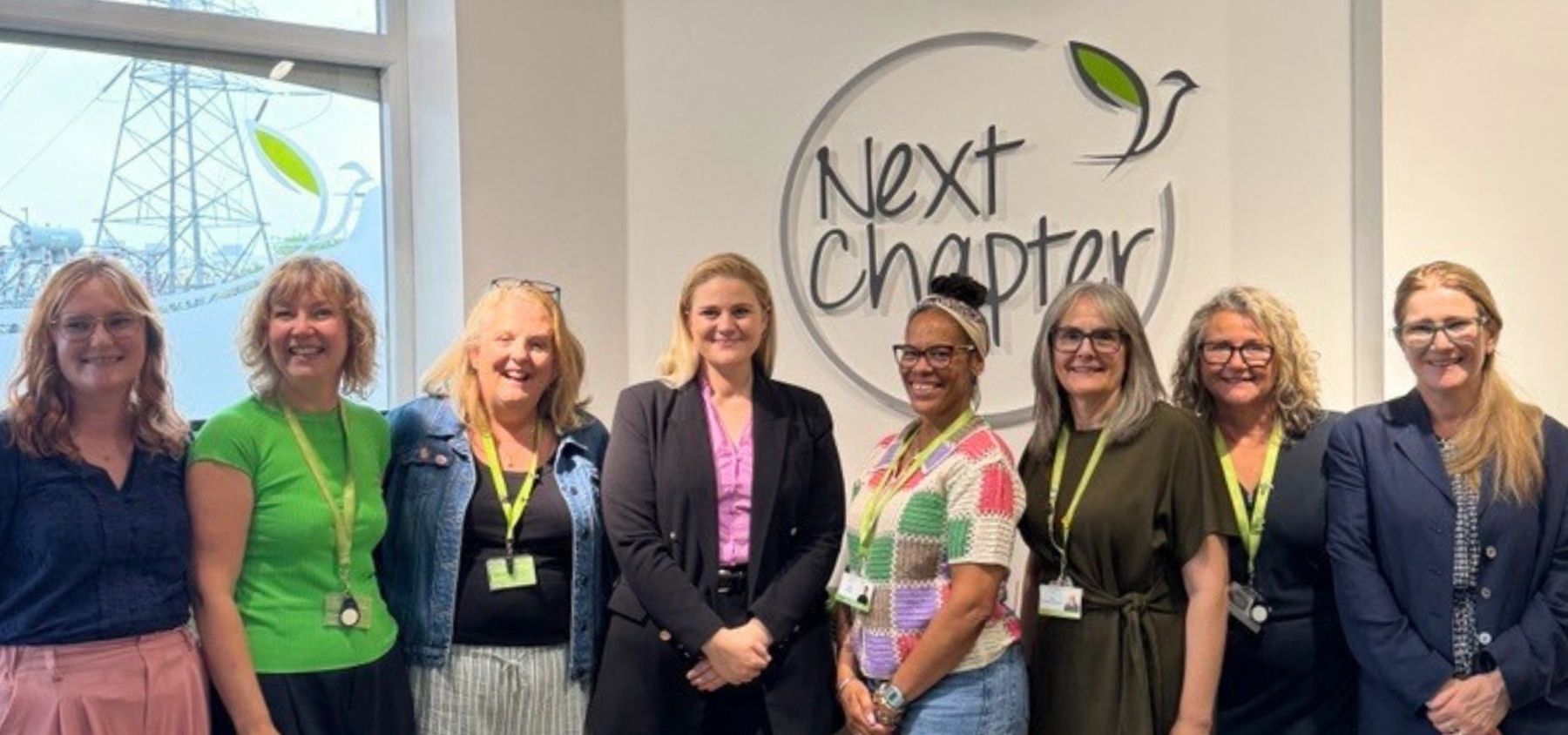
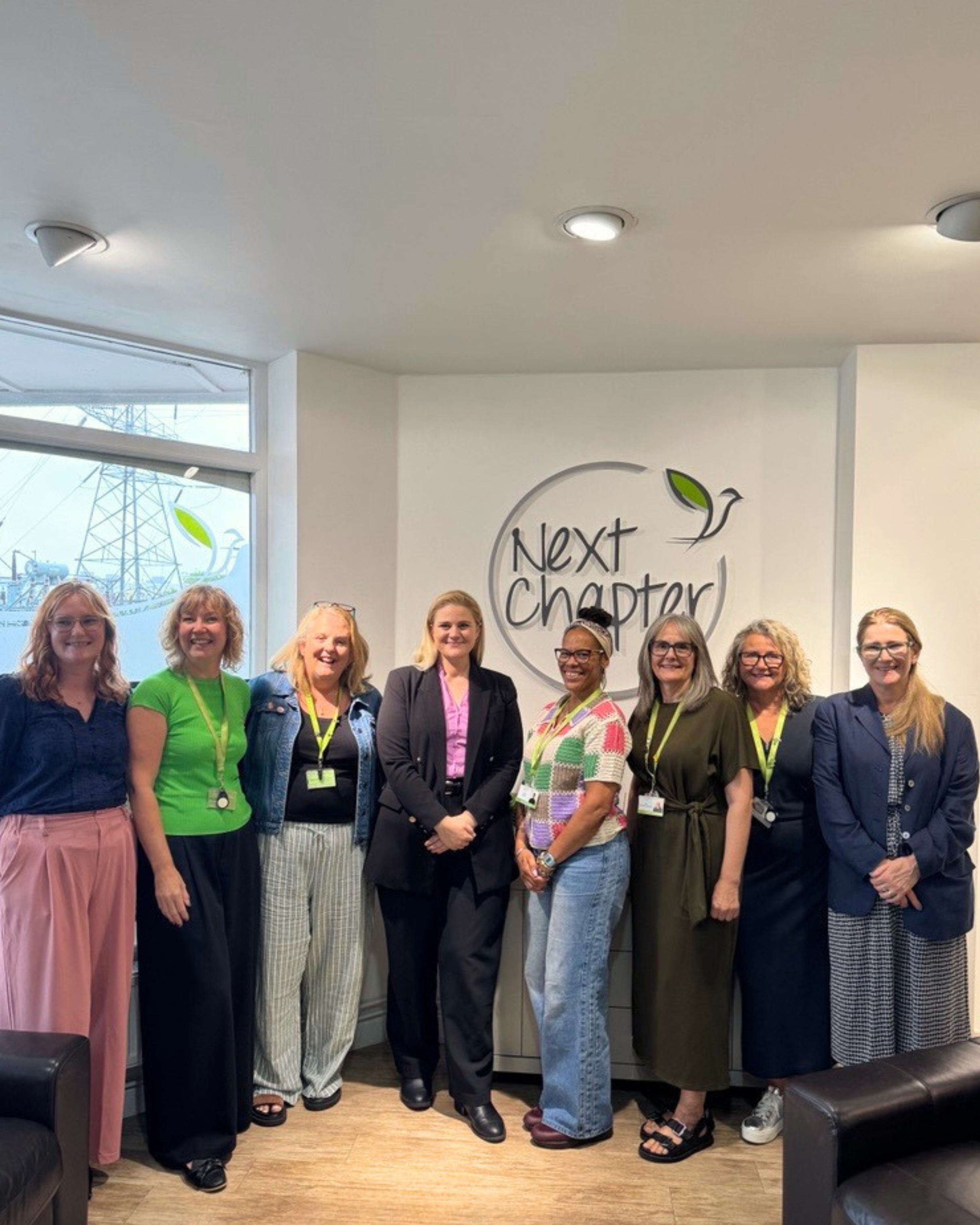
Minister Alex Davies-Jones Visits Next Chapter to Hear Directly from Survivors and Frontline Services
We welcomed Alex Davies-Jones MP, Minister for Victims and Violence Against Women and Girls, to Essex on the 8th of September to learn more about the specialist support services provided by Next Chapter and to hear directly from survivors, frontline staff and partner organisations.
The visit came following the Government's recent announcement of £9.3 million in funding for victims and survivors of crime, including those affected by domestic abuse and sexual violence. While this investment is a welcome step forward, the day provided an important opportunity to discuss both the impact of specialist support services and the ongoing challenges facing the sector.
The Minister's visit began at The Nest, delivered by Next Chapter in partnership with Open Road Visions, which provides a secure and trauma-informed environment for women experiencing domestic abuse alongside challenges relating to substance use. During her visit, residents shared their experiences of navigating abuse, recovery and the criminal justice system. They spoke openly about the realities of rebuilding their lives and the importance of having systems they can trust and rely upon. Survivors highlighted that when victims are informed of actions being taken against perpetrators, those commitments must be honoured, as many make critical decisions about their safety and recovery based on those expectations.
The women also spoke about the value of having their voices heard in conversations about future policy and practice. Many shared that while they cannot change what happened to them, they are passionate about helping to improve experiences for other women in the future.
Staff at The Nest discussed some of the barriers survivors continue to face, including the stigma that can surround both domestic abuse and addiction. These conversations reinforced the importance of advocacy and challenging misconceptions that can prevent women from accessing the support and opportunities they need to rebuild their lives.
The Minister then visited our headquarters, Chapter House, where she met with senior leaders from Next Chapter and CARA (Centre for Action on Rape and Abuse). Discussions focused on the growing demand for specialist services, the pressures facing the domestic abuse and sexual violence sector and the importance of sustainable investment in trauma-informed support. Staff highlighted the impact that funding uncertainty can have on services and ultimately, on survivors who rely on them during some of the most difficult periods of their lives.
A key theme throughout the day was that investment in specialist services is not simply an investment in organisations. It is an investment in the safety and recovery of survivors.
The visit was also featured on ITV Anglia News and the Ministry of Justice social media channels, providing an important opportunity to raise awareness of both the specialist support available and the challenges facing the sector.
The Minister also spent time with a group of CARA survivors, who shared their experiences and reflected on the lasting impact that sexual violence has had on their lives. Their honesty served as a powerful reminder of why survivor voices must remain at the heart of decision-making.
Throughout the visit, one message remained clear, the most effective services, policies and systems are shaped by the people who have experienced them. Listening to survivors, learning from their experiences and ensuring their voices influence future change is essential if we are to create a society where survivors are supported to recover.
We are grateful to the Minister for taking the time to visit Next Chapter, meet the women we support and listen to the experiences of survivors and frontline professionals Her willingness to engage directly with those affected by domestic abuse and sexual violence demonstrates the importance of placing survivors at the forefront of conversations about justice and recovery.
Together, we must continue working towards a future where every survivor can access the support they need.
.jpg)
Stephanie's Story
Hearing directly from survivors is one of the most powerful ways to understand the impact of domestic abuse and the importance of support. Their voices remind us of the reality of abuse, but also of the possibility of recovery. Recently, Stephanie contacted us to share her story and reflect on the support she received from Next Chapter 15 years ago.
"I moved into the refuge in 2011. I was just 17 years old. I had been moved by the police for my own safety after ending an abusive relationship with a man seven years older than me.
After the relationship ended, he stalked and harassed me and threatened my life. This included threats of abduction and taking an overdose while behind the wheel of a car with me in the back seat. There was a marker placed on my home and discussions took place about installing a panic alarm.
I didn't realise it then, but I was still a child, and that was an awful lot for me to deal with.
I turned 18 whilst living at the refuge and I'll never forget the presents left outside my door. My support worker, Lorna, was amazing and I think of her often even now. She inspired me to work in roles that help others. I eventually became a support worker myself, then worked in schools and now I'm a nursery manager and safeguarding lead.
I always try my best to advocate for others.
Unfortunately, I did go on to enter another abusive relationship. However, I escaped that many years ago and I still surprise myself with my resilience.
I still live with PTSD and anxiety because of everything I've experienced, but I'm so much stronger now than I was back then.
I have two wonderful boys who make life worth living.
I went back to college and completed my A-levels, then my degree, and now I'm studying for a Master's in Psychology whilst working and raising my boys.
Whilst I would like to thank everyone who helped me at the refuge all those years ago, I owe a special thanks to Lorna. You helped shape who I am today and I couldn't be more grateful.
I would also like to mention the businesses and people who donated to the refuge. I remember Sainsbury's donating flowers every week and they were genuinely a highlight. To anyone in a position to donate, no matter how big or small, please know that it is appreciated and it makes a difference.
I hope my story can give someone, someone like my 17-year-old self, hope that things really do get better.
I drew a picture for the refuge when I was there and wrote underneath it, 'I believe in better'. To this day, I still believe in and hope for better."
Stephanie's story reminds us that recovery is not always straightforward. The effects of domestic abuse can last long after the abuse has ended and healing rarely follows a simple path. Yet her journey is also a testament to her courage and the life-changing impact of support at the right time.
Today, Stephanie is helping others, raising her family, pursuing further education and continuing to advocate for those who need a voice. Her story shows that whilst abuse may be part of someone's past, it does not have to define their future.
Most importantly, her words offer hope to anyone experiencing abuse or rebuilding their life after it. Thank you, Stephanie, for sharing your story and reminding us all to ‘believe in better’.
.jpg)
Next Chapter at the House of Lords Select Committee on Domestic Abuse
In March, our CEO, Beverley Jones and IDVA Service Manager, Ruth Cherry-Galal represented Next Chapter at the House of Lords Select Committee on Domestic Abuse, delivering powerful evidence on how recent changes are affecting our clients. They highlighted both the positive work of Essex Police and the vital improvements needed across the wider system. Ruth gave an exceptional contribution, impressing the Committee Chair, Baroness Kennedy, who publicly praised her expertise and impact. A huge achievement!
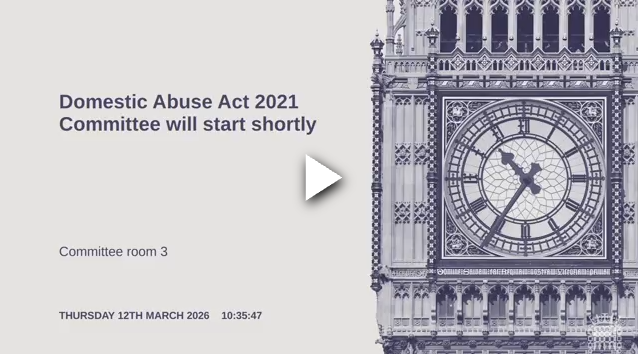
This was a major moment of national recognition for Next Chapter, showcasing the knowledge and dedication within our team. You can watch Bev and Ruth’s appearance alongside Harriet Wistrich above (skip to 11:43:20). This is an incredible spotlight on our organisation and the important work we do every day.
%20(6).jpg)
Stanley’s Story
Domestic abuse affects people of all genders and sexualities. But for many LGBTQ+ individuals, those experiences are still too often misunderstood or silenced. At Next Chapter, we see this first hand. Abuse doesn’t always look the same and for LGBTQ+ survivors, it can come with additional layers of complexity. That’s why our doors are open to anyone who needs support.
Listening to survivors is at the heart of what we do. It takes immense courage to speak out. People share their stories not just for themselves, but for others who may not yet realise help is available. Representation matters, when people see themselves reflected, they’re more likely to reach out.
Stanley’s Story
In 2026, Stanley*(name changed to protect his identity) was referred to Next Chapter by his caseworker. As a trans man, he had reached a point where he needed to escape the abuse he was experiencing.
Stanley endured psychological abuse that targeted his identity. His gender was used against him, harmful comments were made, such as telling him he would “never be a man” and that he would “always have a girl’s body”. Words like these can have a profound impact. They undermine confidence and distort self-worth. Reflecting on his experience, Stanley shared:
“A lot of people take advantage of people who identify as trans, especially when they’re still figuring things out…They try to push boundaries or explore parts of you that you’re not comfortable with.”
His words highlight a painful reality, vulnerability is often exploited. Abuse in LGBTQ+ relationships can involve control, coercion and manipulation linked to identity, making it even harder to recognise.
Eventually, Stanley made the incredibly difficult decision to leave. He stepped away from everything familiar and moved into our dispersed housing, beginning his journey towards safety and recovery.
When he arrived, Stanley wasn’t just carrying the trauma of abuse. Like many survivors, he had turned to substances to cope. He described those first moments with us as: “A mixture of emotions…I felt like I was finally free, finally safe. But there was also fear, because I was taking myself away from the comfort of my life.”
That combination of relief and fear is something many survivors experience. Leaving abuse isn’t just about escaping harm, it’s about rebuilding a life from the ground up.
Starting some where new is daunting. But with support from his practitioner, Stanley told us his experience has been “amazing” and “My needs are met and I feel like my character is understood. They take the time to understand my mental health as well. It’s been hard and there are a lot of ups and downs, but I speak out when I’m having bad times.”
Our practitioners work alongside each person to build safety plans, offer guidance and provide support on both good days and difficult ones. We want every survivor to feel heard and empowered to be themselves.
Stanley shared that this support has helped him reconnect with who he is “It’s helped me realise who I am.”
A key part of Stanley’s recovery has been having his own safe, private space. Through our dispersed housing, he has a self-contained flat where he can feel secure and begin to rebuild.
We’ve also supported him with practical steps, including helping with legal documentation to change his name, advocating for his rights and putting plans in place to support him through challenging moments.
Reflecting on his journey, Stanley told us he is most proud of his sobriety: “Sitting with my emotions…the fact that I am sober, I’m not abusing alcohol anymore to take the pain away.”
He also shared the importance of patience in recovery: “There are times where I feel like I could be a lot further than I am, but I remind myself that everything isn’t built in a day.” Recovery takes time. It isn’t a sprint. Every step forward is brave and Stanley is building a freer future for himself. Stanley is still on his journey with us. As new challenges arise, we will continue to walk alongside him and provide the support he needs.
When asked what he would say to others in his community experiencing abuse, he said:
“Reach out for help, do it. Don’t let the comfort of your situation keep dragging you backwards…continue to be brave and your life will change.”
At Next Chapter, we recognise that every survivor’s experience is unique. For LGBTQ+ individuals, support must be inclusive and free from judgement.
We can provide:
· Specialist practitioners who listen.
· Safe, confidential accommodation.
· Emotional and practical support to rebuild confidence and independence.
· A space where people can be fully themselves, without fear.
Most importantly, we believe survivors. We validate their experiences and stand alongside them as they rebuild their lives.
Stanley’s story is just one of many. It’s a reminder that domestic abuse can affect anyone and that identity should never be used as a weapon.
If you or someone you know is experiencing abuse, please remember you are not alone. Support is available and we’re here when you’re ready.
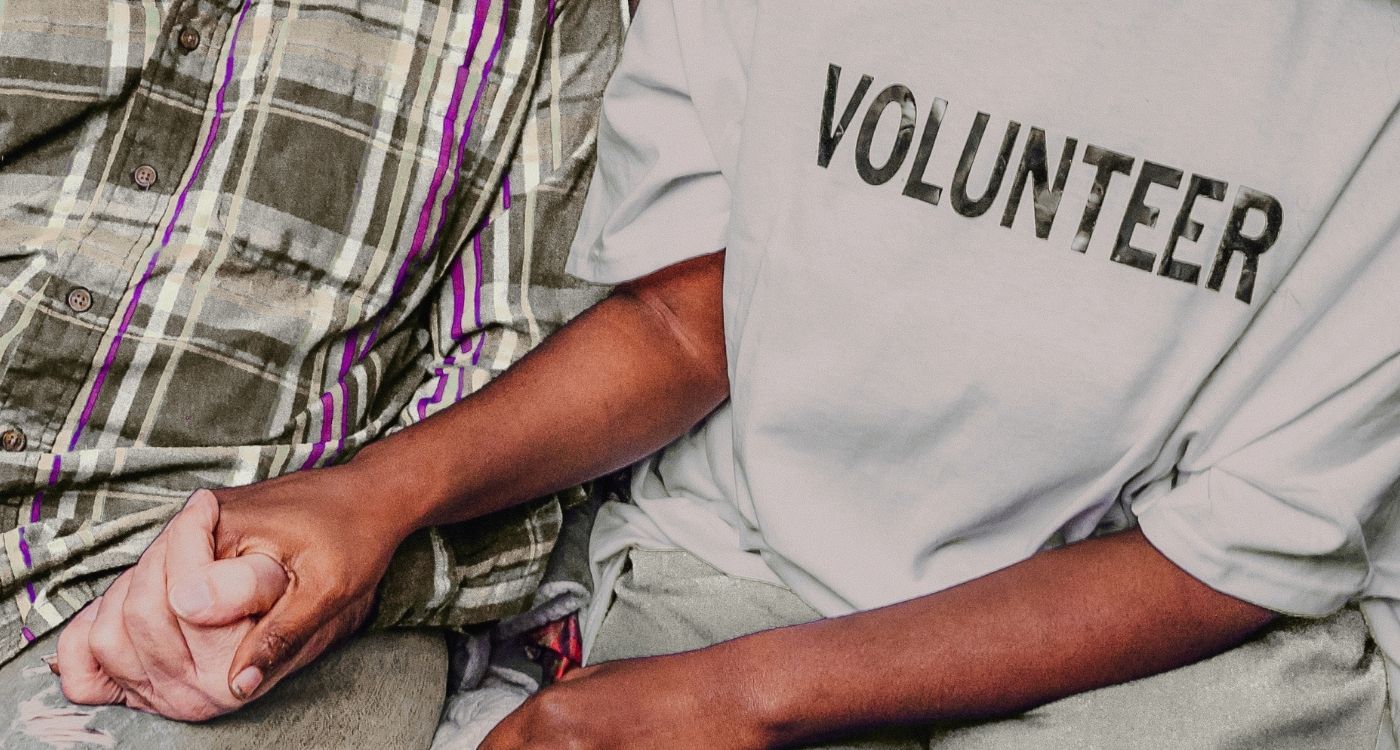
Why volunteering matters to us and those we support…
At Next Chapter, our volunteers help us bridge the gap for clients nearing the end of their time with us, or after they’ve moved on from our service. With regular check-ins, they offer stability during what can be an uncertain time, making sure no one feels alone.
When people hear the word ‘volunteer’, they often picture someone helping out every now and then, maybe making a cup of tea or lending a hand at an event. But our volunteers are so much more than that. They give an hour a week to be compassionate listeners and continue to walk alongside our clients while they further explore their empowerment journey and what their next chapter looks like. As one volunteer shared:
Being a volunteer means giving an hour of my time listening, reflecting back and just being present.”
They show up in all weathers, often balancing their own busy lives, yet still choosing to give their time and energy to support survivors of domestic abuse. For many, the impact of that time is life changing. One client described their volunteer as, “a bit of a life saver for me. Not only someone to talk to. She understood me. She gave freely of her time and was both compassionate and empathetic.” They went onto say, “I can never forget her kindness…I now believe that I have a future.”
Our volunteers support survivors in many different ways across the organisation. The majority offer one-to-one empowerment support to those who have completed a programme within one of our Next Chapter teams. Others assist with fundraising and events, support recovery programmes such as RISE, or provide practical help within our refuges.
Their impact comes through listening and simply being present. As one client put it, “Sometimes you just need to vent to someone who's not a friend or family member, but someone who has spoken to people who have been through the same situation.” And crucially, “Having someone to talk to who listens without judging…makes you realise you’re not going crazy.” This non-judgemental, consistent support is often what helps clients move from surviving to thriving.
The transition from structured support to independence can be one of the most challenging stages of recovery. Volunteers play an essential role in making that transition feel safe and manageable. As one volunteer explains, “Volunteers provide an invaluable light touch, pastoral support for clients who are moving from surviving to thriving…allowing this transition to move slowly and gently at the pace of the client.” Another volunteer reflected on the impact of this work:
Through empowerment calls, I have had the privilege of supporting a client in rebuilding confidence…feeling heard without judgement…and taking small but important steps towards hope and independence.”
For clients, this support can be transformative. One shared, “Just talking…he doesn’t judge me, he listens…he has been my rock.”
Another added, “made me realise that I am not the source of the problem…helped me feel confident and stand up for myself.”
These relationships help rebuild confidence, restore self-worth and remind people that they are not alone. Volunteering is not only about supporting others, but it is also deeply meaningful for those who give their time. One volunteer shared:
Volunteering with Next Chapter has been an incredibly meaningful experience…I feel proud to contribute to work that genuinely changes lives.”
Another highlighted the connection built through face-to-face support, “Attending the coffee mornings has been especially rewarding…being with such inspiring individuals who are navigating challenging times.”
Our volunteers often speak about the power of simply being present, listening and believing in someone’s potential and our clients feel that deeply. As one client said simply, “They cared. Which is really valuable when it feels like society doesn’t.”
Over the last six months, volunteering at Next Chapter has grown in incredible ways. Following conversations across our teams about where volunteers could make the biggest impact, we introduced eight brand-new volunteer roles across the organisation.
Thanks to two successful recruitment campaigns, our volunteer team grew from 10 volunteers to 29. That growth has helped us reach more people and strengthen our services. They remind us of the power of community and what can be achieved when people come together to support one another. Their dedication allows our staff to respond to the increasing demand for support, ensuring more people can access the help they need.
Volunteering is not just about giving time. It is about giving compassion, understanding and hope.
To every one of our volunteers, thank you. Thank you for your time, your energy, your patience and your kindness. Thank you for every conversation, every moment of reassurance and every step you walk alongside someone in their recovery.
.jpg)
Behind the statistic, lives affected by stalking…
For many survivors, stalking doesn’t start with one dramatic incident. It often begins with boundaries being ignored. While stalking can happen to anyone, it is more common after the end of an intimate relationship and is often driven by a need to regain control. The impact can be deeply traumatic and life‑changing.
Stalking is a pattern of behaviour that wears away at someone’s sense of safety and emotional wellbeing over time. Separation is a known point of escalation. When control is challenged, behaviours can intensify. In UK policing, stalking is recognised as a predictor of domestic homicide. An escalation of behaviour can have devastating consequences, with data showing that most domestic homicides occur within 6 months of separation. 41% of women killed by a current or former partner had separated or were trying to. 30% were killed in the first month and 70% within the first year.
Behind every statistic is a real person. Last year, we supported 234 victims of stalking, each with their own story and a few survivors have allowed us to share parts of their experiences to highlight just how damaging stalking can be.
One survivor was stalked after separating from her husband. Despite clear requests for him to stop, he continued with constant messages and calls, doing everything he could to make his presence felt and take back control. Closure became impossible. Over time, his behaviour escalated, from unwanted contact to turning up in person, monitoring movements and making threats of self-harm. This can be an abusive person’s tactic, in aim to attempt ideas of self-guilt, responsibility and place blame at the hands of the victim, the abusive person is manipulating to gain control back.
One survivor said:
“I would clearly draw a line in the sand, but that line was repeatedly crossed. A non-abusive person respects boundaries and stops contac when asked” and “I’ve had to change my routines and I’m always aware of what’s around me.”
Having to be constantly alert is a common feeling when being stalked. Survivors often change routines, stay hyper‑aware of their surroundings and begin to doubt their own reactions. The mental exhaustion can be overwhelming and just as harmful as physical abuse.
Home, a place that should feel safe, can become frightening. As one survivor told us:
“It’s felt like living in a haunted house. Even when nothing is happening, there’s a constant fear that something could happen at any time. It can make you question yourself and feel like you’re losing your mind.”
In one case, safety planning with their assigned IDVA (Independent Domestic Abuse Adviser), who also assisted with a house application, helped a survivor relocate. Too often, it’s the survivor who has to leave their home, support networks and community, while the perpetrator’s life goes on as normal.
For survivors with children, the impact can be even greater. Protecting children while managing fear, trauma and sometimes, complex family court processes is incredibly challenging. Stalking rarely affects just one person, it impacts the whole family.
Many survivors also face difficulties when seeking protection. Delays and unclear decision-making can leave people feeling unheard. Legal measures like court orders are important, but they don’t physically stop someone from making contact. Risk doesn’t disappear just because communication pauses.
Specialist support can make a huge difference. IDVAs help survivors understand risk, document patterns, plan for safety and feel believed. One survivor told us:
“They helped me understand the risk, put safety measures in place and made sure my situation was taken seriously.”
Stalking is a serious crime that can escalate and cause lasting harm. If something feels wrong or frightening, it’s enough to seek help.
We asked one of our survivors what they felt needed to change most:
“There needs to be better recognition of patterns and fixation, even when contact has stopped. Court orders help, but they don’t physically stop someone. The risk can still be there.”
This is why awareness matters. National Stalking Awareness Week helps shine a light on these realities, but this conversation needs to continue all year round. We must challenge myths, recognise patterns early and take survivors seriously.
If you or someone you know is experiencing stalking, help is available. Stalking is a crime and early support can save lives.
Contact us on 01206 500585 or COMPASS on 0330 333 7 444.